About 171 minutes
Biographical Sketches of the Generals of the Continental Army of the Revolution — A Reader’s Guide
Modern Nations
39,129 recorded words. 6 minutes difference from this book's estimate.
View Gutenberg source #54153
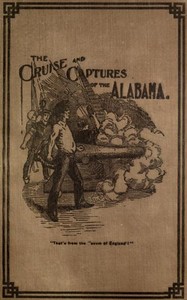
The catalog record for Cruise and Captures of the Alabama — Reading Companion provides practical reading context through 40,487 words, 2 hr 57 min estimated reading time, and 5 detected text sections.
The text analysis averages about 23.1 words per sentence, while the detected sections provide another way to judge how the source is divided.
Project Gutenberg metadata also associates the work with “Alabama (Screw sloop),” connecting these edition facts with the source record’s subject description.
Explore this collection
These alternatives are selected using recorded categories and estimated reading time.
About 171 minutes
Modern Nations
39,129 recorded words. 6 minutes difference from this book's estimate.
View Gutenberg source #54153About 185 minutes
Modern Nations
42,530 recorded words. 8 minutes difference from this book's estimate.
View Gutenberg source #15109About 168 minutes
Modern Nations
38,417 recorded words. 9 minutes difference from this book's estimate.
View Gutenberg source #22655Search stored excerpts and compare books → Choose by your preferences →
Choices use stored catalog measurements. Estimates vary with reading speed. A shared category is a catalog label, not a claim that two books have the same argument or literary quality.
Search reads excerpt text stored with this catalog and links to its associated Gutenberg record. The connection is stored in the site database; this tool does not recheck that every excerpt is word-for-word identical to that external record. Excerpt search does not cover every chapter and does not verify historical publication dates.
Catalog snapshot checked: 2026-09-26. Coverage: 99 public books, 99 available source excerpts.
Calculated from edition completeness, EPUB availability, text structure and catalogue metadata. Not a user rating.
Total of 100 points, scaled to a 2.5-5.0 range. Editions with an empty description or a missing EPUB file are not scored.
Public-domain source text
The source text is kept in the dedicated reader, separate from this catalogue record and its commentary.
Goodrich opens his account of the CSS Alabama not with the ship's launch but with the economic context: the pre-Civil War American carrying trade, which he claims was devastated by the raider's appearance in October 1862. He immediately establishes a documentary approach, citing naval records, Captain Semmes's diary, and the Geneva Tribunal report as sources. The preface promises a “trustworthy” and “readable” synthesis, and the opening chapter frames the Alabama as a “scourge of the seas” that Northern newspapers called a pirate—though Goodrich notes she was regularly commissioned by the Confederacy.
Goodrich’s preface lists his sources: Union and Confederate naval records, Semmes’s expanded memoir, officers’ diaries, and the Geneva Tribunal report. This is not a memoir but a compiled history. The narrative voice is detached, letting documents drive the story. For instance, the description of the Hatteras sinking—lasting “less than fifteen minutes”—relies on precise timing and the detail that the Hatteras threw its port battery overboard to stay afloat. Goodrich also includes Semmes’s own account of entering Port Royal, Jamaica, where he was welcomed by the British flag-ship. The author weaves these sources into a single timeline, but the reader can sense the seams where diary entries and official reports meet.
Goodrich emphasizes the Alabama’s elusiveness. Chapter XIII details her escape from the Gulf of Mexico: she slipped through the Yucatan Channel at night, avoiding Union ships like the Sonoma and Santiago de Cuba. The author notes that Admiral Wilkes and his captains were “as ignorant of Captain Semmes’ presence in the gulf as he was of theirs in the channel.” This mutual blindness becomes a structural motif. Goodrich tracks the Alabama’s movements through dates and coordinates—January 21st, 1863, off Port Royal—creating a cat-and-mouse geography. The reader follows the ship’s path as much as its battles.
Though Goodrich maintains a factual tone, his word choices betray a perspective. He calls the Alabama an “awful scourge” and describes its effect on Northern shipping as “swift vengeance.” Yet he also includes Semmes’s own language, such as calling the captured Union crew “pretty substantial credentials” of his ship’s legitimacy. The author does not resolve the tension between “pirate” and “commissioned cruiser”; he presents both labels. In the Hatteras action, he notes that the Union commander ordered his port battery thrown overboard, “doubtless” keeping the ship afloat long enough for rescue. These small judgments—the word “doubtless”—hint at the author’s interpretive hand.
The provided excerpts cover only the preface, opening chapter, and two later chapters (XII and XIII). The full book includes twenty-one chapters, from the Alabama’s escape from England as the “290” to its final battle with the Kearsarge. The excerpts show Goodrich’s method: he uses dates, ship names, and coordinates to build a factual scaffold. But they do not reveal how he handles the Alabama’s destruction of whalers, its “Off Duty Amusements,” or its time in the Far East. Readers should expect a similar documentary style throughout, with the narrative arc following the ship’s career from construction to sinking.
Goodrich’s Cruise and Captures of the Alabama is best approached as a work of historical compilation rather than a personal narrative. The author’s reliance on multiple primary sources—Semmes’s diary, officers’ accounts, tribunal records—means the book shifts between first-person excerpts and third-person summary. Readers interested in naval tactics will find detailed accounts of captures and escapes; those curious about the Alabama’s legal status will note how Goodrich presents both Confederate and Union perspectives without fully reconciling them.
There are days I think of the Alabama, that doomed ship logged so carefully by Mr. Goodrich, every capture and cannon-shot weighed like testimony. That sort of dutiful record-keeping has its own quiet power, a brotherhood with the regimental chronicle I’ve shelved beside it. Both simply note what happened, one voyage, one march, trusting the facts to murmur their melancholy truths to anyone patient enough to listen. The Seventh Regiment: A Record — Key Ideas to Explore
A brief reflection can help important ideas stay with you longer.