About 261 minutes
All in It : K(1) Carries On — Key Ideas to Explore
World Events
59,903 recorded words. 5 minutes difference from this book's estimate.
View Gutenberg source #12302
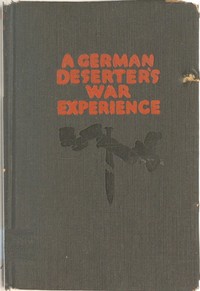
A German deserter's war experience — Inside the Classic can be approached with a clearer sense of reading commitment from its source measurements: 58,709 words, 4 hr 16 min estimated reading time, and 6 detected text sections.
The text analysis averages about 17.8 words per sentence, while the detected sections provide another way to judge how the source is divided.
Project Gutenberg metadata also associates the work with “World War, 1914-1918 -- Personal narratives, German,” connecting these edition facts with the source record’s subject description.
Explore this collection
These alternatives are selected using recorded categories and estimated reading time.
About 261 minutes
World Events
59,903 recorded words. 5 minutes difference from this book's estimate.
View Gutenberg source #12302About 251 minutes
World Events
57,595 recorded words. 5 minutes difference from this book's estimate.
View Gutenberg source #37331About 230 minutes
World Events
52,809 recorded words. 26 minutes difference from this book's estimate.
View Gutenberg source #7405Search stored excerpts and compare books → Choose by your preferences →
Choices use stored catalog measurements. Estimates vary with reading speed. A shared category is a catalog label, not a claim that two books have the same argument or literary quality.
Search reads excerpt text stored with this catalog and links to its associated Gutenberg record. The connection is stored in the site database; this tool does not recheck that every excerpt is word-for-word identical to that external record. Excerpt search does not cover every chapter and does not verify historical publication dates.
Catalog snapshot checked: 2026-09-26. Coverage: 99 public books, 99 available source excerpts.
Calculated from edition completeness, EPUB availability, text structure and catalogue metadata. Not a user rating.
Total of 100 points, scaled to a 2.5-5.0 range. Editions with an empty description or a missing EPUB file are not scored.
Public-domain source text
The source text is kept in the dedicated reader, separate from this catalogue record and its commentary.
The anonymous author of this memoir, a young miner who fled Germany after fourteen months of fighting in France, writes with a deliberate flatness that itself becomes a statement. In the translator's preface, Julius Koettgen notes that the author is "not a literary artist, but a simple workman," and the narrative bears this out: it is a record of exhaustion, hunger, and bureaucratic cruelty, not heroics. The opening chapters establish a voice that is weary, matter-of-fact, and occasionally sardonic, as when soldiers are described as being treated worse than a captain's horse. This is not a story of grand strategy but of the daily grind of survival under incompetent leadership.
The narrator's tone is one of profound physical and emotional depletion. In the excerpt from Chapter XIII, he describes the men as "completely bereft of any will-power of our own" and notes that "we did not care; we had lost all balance." This is not the language of a defeated army but of individuals pushed beyond caring. The captain's arrival—"swearing like a trooper"—is met with silence: "What did we care? Things could not get any worse than they were." The author repeatedly emphasizes this numbness, a psychological state that the translator's preface hints at when it says the author "had not abdicated his reason." The narrative voice thus becomes a document of the psychological toll of prolonged combat, where the only response to abuse is a shrug.
The memoir is sharply critical of the German officer corps, not in abstract terms but through specific, damning incidents. The captain who berates the men for losing their equipment is described as having "suffered the 'miserable vagabonds' to go forward while he himself had been defending his 'Fatherland' at Vitry, three or four miles behind the front." The scare quotes around "Fatherland" signal the author's contempt. Later, a sergeant who accidentally shoots himself in the hand is threatened with court-martial for "self-mutilation on the battle-field," even as the soldiers recognize the act as a desperate escape. The author notes that "punishments for self-mutilation are the order of the day," but that "the people at home, however, will get to hear very little of them." This is a quiet indictment of a system that criminalizes despair.
The account of the retreat after the Battle of the Marne is marked by disorientation and a breakdown of order. The men are woken from sleep, marched without explanation, and given only the task of guarding bridges in case of a German retreat. The author's description is deliberately anticlimactic: "We marched off and halted at the northwestern exit of the village." There is no dramatic narrative of defeat, only a sense of aimless movement. The officer's representative explains that they will not be led into the firing line that day, but the men are too exhausted to care. The translator's preface notes that this is "the first German description of the retreat of the Teutonic armies after the battle of the Marne," and the author's treatment of it as just another wearying episode underscores his larger argument: that war is not a series of glorious battles but a monotonous cycle of suffering.
Readers should approach this memoir as a deliberately unpolished testimony. The author's limited literary powers, as the translator puts it, are not a flaw but a feature: they strip away any pretense of romance or narrative convention. The book is best read as a primary source on the psychology of the common soldier—one who refused to see war as anything but "butchery and brutality, grime and vermin, inhuman toil and degradation." Pay attention to the gaps: what the author does not say, what he dismisses with a shrug, is as revealing as what he describes.
Reading this anonymous miner’s flat, unheroic account, I remembered my grandfather’s silence about the war—how he’d only say, “We just held on.” The same ache surfaced in The Greater Love — Context and Discussion, where love isn’t grand either, just a steady hand in the dark. Both books feel less like stories and more like someone finally exhaling.
Your answers remain private and are stored only in this browser.