
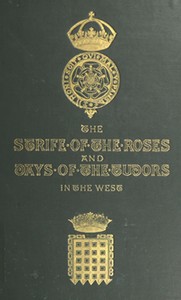
The Strife of the Roses and Days of the Tudors in the West by W. H. Hamilton Rogers
If you picture the Wars of the Roses as a chess match played in palaces between nobles named Henry and Edward, this book will change your mind. W. H. Hamilton Rogers pulls the camera back from London and trains it on England's West Country, showing us how this dynastic war was fought in the muddy lanes of market towns and the great halls of regional castles.
The Story
This isn't a novel with a single plot, but a detailed account of a region under immense pressure. Rogers starts by setting the stage—why the West Country mattered, who the major local families were (like the Courtenays and the Bonvilles), and where their loyalties lay. Then, he walks us through the key battles and political shifts, from the early conflicts to the rise of the Tudors, but always through a West Country lens. We see how towns like Exeter and Bodmin were fortified, how local lords made (and broke) alliances for survival, and how the final victory of Henry Tudor (a Welshman with strong western ties) was felt as a local triumph. The 'Days of the Tudors' section then explores how this same region helped stabilize the new dynasty, focusing on figures like Sir Peter Carew and the ongoing religious changes.
Why You Should Read It
What makes this book special is its focus. By narrowing the scope, Rogers makes the history feel immediate. You get a real sense of the impossible choices communities faced. Should they back Lancaster today, knowing a Yorkist army might be here tomorrow? The book is filled with small, telling details from local archives—property disputes, town charters, letters—that show the war's ripple effects on everyday life. It strips away the myth and shows the conflict as a messy, local affair. Rogers's writing, while from another century, is clear and driven by a palpable enthusiasm for his subject. You can tell he loved digging through old county records and connecting them to the bigger picture.
Final Verdict
This is a perfect pick for history lovers who already know the basic timeline of the Wars of the Roses or the Tudor ascent and want to go deeper. It's especially rewarding if you have an interest in English regional history or genealogy from the West Country. Because it was written in the 1800s, the prose is formal but not difficult, and it offers a fascinating historical perspective in itself—it's how a Victorian gentleman understood the 15th century. It might feel a bit dense for a complete beginner, but for someone with a bit of background, it's a goldmine. Think of it as a detailed, passionate guided tour through a crucial part of England's past, led by a very knowledgeable local expert.
There are no legal restrictions on this material. It serves as a testament to our shared literary heritage.
Richard White
2 months agoI was particularly interested in the case studies mentioned here, the objective evaluation of the pros and cons is very refreshing. Definitely a five-star contribution to the field.
Margaret Williams
5 months agoHaving read the author's previous works, the logic behind each conclusion is easy to follow and verify. If you want to master this topic, start right here.
Donald Anderson
1 year agoThe clarity of the introduction set high expectations, and the way the author breaks down the core concepts is remarkably clear. I’ll definitely be revisiting some of these chapters again soon.
Michael White
1 month agoAs someone working in this industry, I found the insights very accurate.





Christopher Davis
5 months agoI found the data interpretation to be highly professional and unbiased.