
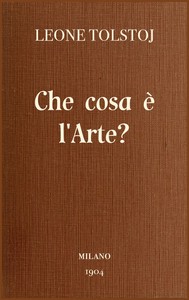
Che cosa è l'arte? by graf Leo Tolstoy
Leo Tolstoy's What is Art? isn't a story in the traditional sense. There's no plot, no characters. Instead, think of it as a passionate, 200-page argument from one of history's greatest novelists. Tolstoy looks at the art of his era—complex symphonies, obscure poetry, paintings only critics seemed to love—and declares most of it a failure. He's furious. He believes the elite have hijacked art, turning it into a private club for the rich and educated, something that requires special training to 'get.'
The Story
The 'story' here is Tolstoy's quest for a definition. He dismisses popular ideas that art is about beauty or giving pleasure. Too vague, he says. Instead, he builds his own case: real art is about 'infection.' A true artist feels a powerful emotion—joy, sorrow, anger—and, through their work, transmits that exact feeling to the viewer or listener. If you feel what the artist felt, it's art. If you don't, it's not. It's that simple for him. Using this rule, he makes shocking judgments. He loves simple folk songs and stories that move peasants. He dismisses much of Beethoven, Wagner, and even some of his own later work as empty and false because it fails to connect with ordinary people.
Why You Should Read It
You should read this because it will make you argue with every page—and that's the point. Whether you agree with Tolstoy or think he's completely wrong, he forces you to defend what you love. Reading his rants about opera being absurd or complex poetry being pointless is incredibly fun. More importantly, his core question is timeless. Every time we scroll past a modern art piece online and see the comments filled with 'My kid could do that!' we're having Tolstoy's argument. He pushes us to think about connection over complexity, and about whether art's job is to confuse us or to unite us.
Final Verdict
This book is perfect for anyone who's ever felt puzzled or left out by 'high art.' It's for the person who loves a pop song that gives them chills but feels intimidated by a classical concert. It's also a must-read for artists of any kind, as a fiery reminder to check their motives. Is your work about showing off, or is it about sharing something real? Be warned: Tolstoy is extreme, and you likely won't walk away adopting all his views. But you will never look at a painting, listen to a song, or read a poem the same way again. It's a short, provocative shake-up for your brain.
This digital edition is based on a public domain text. You are welcome to share this with anyone.
Donna Hill
1 year agoThe fonts used are very comfortable for long reading sessions.
Susan Smith
1 year agoInitially, I was looking for a specific answer, but the author’s unique perspective adds a fresh layer to the discussion. I'm genuinely impressed by the quality of this digital edition.