
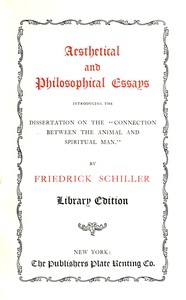
Aesthetical and philosophical essays : introducing the dissertation on the…
Let's be clear: this isn't a novel with a plot. It's a series of essays where Friedrich Schiller, the German playwright and thinker, lays out his ideas about art, beauty, and what it means to be human. He's writing in response to the rigid rationality of his time, making a passionate case that our feelings and our sense of beauty are just as important as cold, hard logic.
The Story
There's no traditional story here. Instead, Schiller builds an argument across the essays. He starts by challenging the idea that art is just decoration or simple imitation. For him, true art is a 'play' between our senses and our reason. He introduces his famous idea of the 'play drive'—the human impulse that bridges our physical needs and our moral thinking. This is where beauty lives. He then applies these ideas to big topics: how we experience the tragic in art, the difference between 'naive' and 'sentimental' poetry, and ultimately, how engaging with beauty can cultivate a more balanced, free, and moral individual. The 'story' is the journey of his thought.
Why You Should Read It
I picked this up because I love art, but I often struggle to articulate why it affects me so deeply. Schiller gave me the language. His writing isn't dry; it's charged with a poet's passion. When he talks about beauty as a force for human dignity, it feels urgent, even today. Reading him, you start to see connections everywhere—between a well-designed public space and civic harmony, or between a powerful film and your own sense of empathy. It upgrades how you look at the world. You don't have to agree with every point (some parts feel very of his time), but the core idea—that beauty matters for a full life—is profoundly validating for anyone who feels art is essential, not optional.
Final Verdict
This is for the curious reader who enjoys big ideas. Perfect for artists, writers, or musicians looking for a philosophical foundation for their work. It's also great for anyone in a STEM field who wants to understand the humanistic value of art. If you enjoyed writers like Susan Sontag or John Berger, you'll find a fascinating historical root for their ideas here. It does require a bit of focus—it's philosophy, after all—but the payoff is a richer, more thoughtful relationship with every movie, song, or painting you encounter from then on.
This publication is available for unrestricted use. Feel free to use it for personal or commercial purposes.




Paul White
10 months agoIt took me a while to process the complex ideas here, but the case studies and practical examples provided add immense value. A perfect balance of theory and practical advice.