
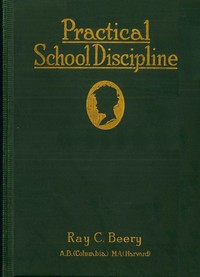
Practical school discipline : Applied methods, part 2 by Ray Coppock Beery
I picked up Ray Coppock Beery's Practical School Discipline: Applied Methods, Part 2 expecting a dry educational text. What I got was a direct line to the mindset of American schooling nearly a century ago. Published in 1929, this book is the second half of Beery's guide for teachers and principals, and it operates under one core principle: order above all else.
The Story
There's no traditional plot with characters. Instead, the 'story' is the system Beery builds. He walks the reader through detailed, step-by-step procedures for managing a classroom. Think military precision for third-graders. He covers everything from the exact way students should enter and leave a room, to how to arrange desks, to managing supplies. The real focus, though, is on correcting misbehavior. Beery outlines a clear hierarchy of consequences, starting with stern looks and moving up to physical isolation, public shaming, corporal punishment (referred to plainly as 'the rod'), and even expulsion. The language is direct and unemotional. A child's action is a 'problem,' and the teacher's response is the 'solution.' It's a cold, efficiency-focused blueprint where the smooth operation of the group is the ultimate goal.
Why You Should Read It
Reading this isn't about agreeing with it. It's about understanding a foundational layer of our educational history. As a modern reader, your jaw will drop at some passages. The assumption that fear and shame are effective tools is presented as simple fact. But that's what makes it so valuable. It forces you to confront how far educational philosophy has traveled. You see the roots of practices we now question and gain a profound appreciation for the shift toward understanding child psychology and building relationships. It's also weirdly practical in its granularity; you get a vivid picture of a 1920s classroom down to the last piece of chalk. This book doesn't just tell you about history—it makes you feel the stark difference between then and now.
Final Verdict
This is a niche read, but a powerful one. It's perfect for current teachers and education students who want to understand the historical context of their profession. It's also great for social historians and anyone interested in the day-to-day reality of early 20th-century life. If you approach it not as a guide but as a primary source document, it's utterly absorbing. Be warned: it can be an uncomfortable read. But that discomfort is the point. It holds up a mirror to our past, reminding us that the way we choose to guide children is a reflection of our deepest values as a society.
The copyright for this book has expired, making it public property. It is available for public use and education.
George Martinez
2 years agoThe information is current and very relevant to today's needs.
Ashley Martin
8 months agoHaving read the author's previous works, the nuanced approach to the central theme was better than I expected. I am looking forward to the author's next publication.
Joseph Harris
1 year agoExtremely helpful for my current research project.
Michael Rodriguez
1 year agoIf you're tired of surface-level information, the breakdown of complex theories into digestible segments is masterfully done. Highly recommended for those seeking credible information.




David Gonzalez
1 year agoI was skeptical about the depth of this book at first, but the chapter on advanced strategies offers insights I haven't seen elsewhere. Highly recommended for those seeking credible information.