
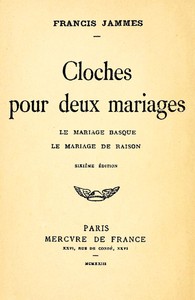
Cloches pour deux mariages: le mariage basque; le mariage de raison by Jammes
Francis Jammes' Cloches pour deux mariages (Bells for Two Weddings) is a quiet, double-portrait from 1901. It presents two wedding stories back-to-back, offering a study in contrasts without ever needing to shout.
The Story
The first part, The Basque Wedding, is drenched in local color. We follow the preparations and ceremony of a wedding in the Basque Country. Jammes fills the pages with specific details—the customs, the landscape, the food, the sounds of the local language. The focus is on community and the deep, almost physical connection between the people and their land. The marriage feels like a natural outgrowth of this environment.
The second part, The Marriage of Reason, swaps rural tradition for Parisian salon society. Here, a marriage is arranged between two families for social and financial advantage. The emotions are restrained, the conversations are polite, and the whole event feels like a carefully negotiated contract. Love, if it's considered at all, is hoped to develop later, as a byproduct of good manners and shared status.
Why You Should Read It
What I loved most was how Jammes builds his argument without arguing. He never says 'this wedding is better than that one.' He just shows you both, in rich, simple prose. The Basque wedding feels alive, messy, and rooted. The marriage of reason feels clean, proper, and a little lonely. The power is in the gap between them. It makes you ask questions about what we sacrifice for stability and what we gain from tradition. The characters aren't deeply psychological in a modern sense, but they feel true to their worlds. You understand the weight of expectation on the society bride just as much as you feel the unspoken bond of the Basque couple.
Final Verdict
This book is perfect for readers who enjoy character-driven stories and slices of historical life over fast-paced plots. It's for anyone who likes to people-watch, but in book form—across a century of distance. If you're interested in French culture, regional history, or just timeless questions about marriage and society, Jammes' paired stories offer a short, elegant, and surprisingly potent read. Think of it as a beautifully composed photograph of two different lives; its meaning develops slowly, long after you've turned the last page.
This is a copyright-free edition. It is now common property for all to enjoy.
George Hernandez
1 year agoI've been looking for a reliable source on this topic, and the language used is precise without being overly academic or confusing. It’s a comprehensive resource that doesn't feel bloated.
Barbara Lopez
3 months agoAs a long-time follower of this subject matter, the data points used to support the main thesis are quite robust. I am looking forward to the author's next publication.
Karen Martinez
1 year agoThe author provides a very nuanced critique of current methodologies.
Robert Perez
6 months agoI've gone through the entire material twice now, and the author doesn't just scratch the surface but goes into meaningful detail. I’ll definitely be revisiting some of these chapters again soon.





Sarah Miller
5 months agoHaving read the author's previous works, the breakdown of complex theories into digestible segments is masterfully done. I'll be citing this in my upcoming project.